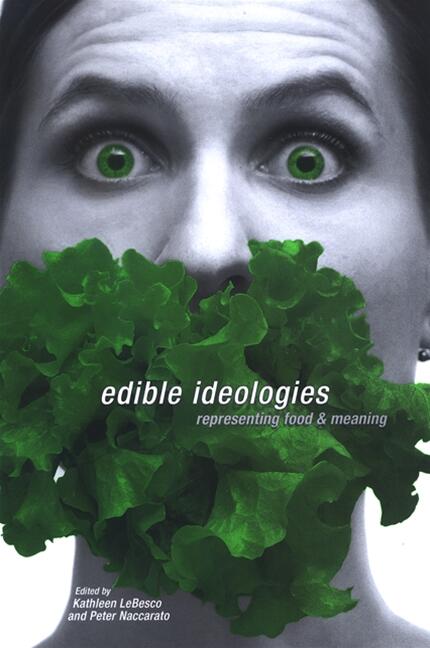
Edible Ideologies
Representing Food and Meaning
Alternative formats available from:
Contributors explore the relationship between food and the production of ideology.
Description
Edible Ideologies argues that representations of food—in literature and popular fiction, cookbooks and travel guides, war propaganda, women's magazines, television and print advertisements—are not just about nourishment or pleasure. Contributors explore how these various modes of representation, reflecting prevailing attitudes and assumptions about food and food practices, function instead to circulate and transgress dominant cultural ideologies. Addressing questions concerning whose interests are served by a particular food practice or habit and what political ends are fulfilled by the historical changes that lead from one practice to another in Western culture, the essays offer a rich historical narrative that moves from the construction of the nineteenth-century English gentleman to the creation of two of today's iconic figures in food culture, Julia Child and Martha Stewart. Along the way, readers will encounter World War I propaganda, holocaust and Sephardic cookbooks, the Rosenbergs, German tour guides, fast food advertising, food packaging, and chocolate, and will find food for thought on the meanings of everything from camembert to Velveeta, from salads to burgers, and from tikka masala to Campbell's soup.
At Marymount Manhattan College, Kathleen LeBesco is Associate Professor of Communication Arts, and Peter Naccarato is Associate Professor of English. LeBesco's previous books include Revolting Bodies? The Struggle to Redefine Fat Identity.
Reviews
"The contributions to Edible Ideologies show a richness of concrete argument … Vividly and vibrantly, the essays … reveal multitudes of meaning. " — Gastronomica
"…this collection moves beyond the scope of 'food studies' to be of interest to readers in literature, gender studies, sociology, advertising history, and related disciplines. " — CHOICE
"This is a solid intervention in contemporary debates about food and representation in the Anglo-American world. The essays are historically rich, theoretically engaging, and unpredictable enough to be immensely readable. Who knew that a box of Jell-O would do so much harm to Ethel Rosenberg's case?!" — Krishnendu Ray, author of The Migrant's Table: Meals and Memories in Bengali-American Households