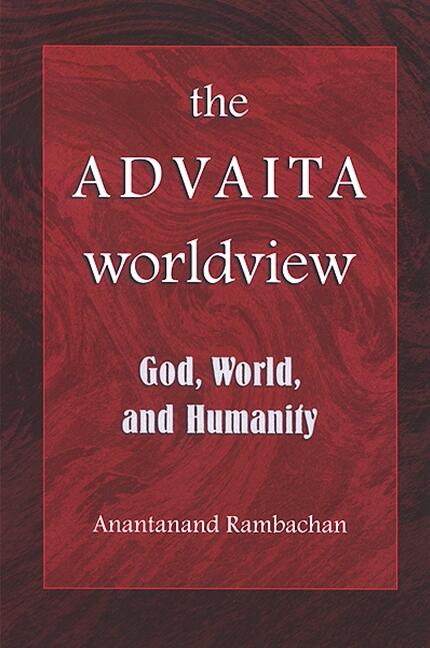
The Advaita Worldview
God, World, and Humanity
Alternative formats available from:
A new interpretation of Hindu tradition focusing on the nature of God, the value of the world, and the meaning of liberation.
Description
2007 CHOICE Outstanding Academic Title
In this book, Anantanand Rambachan offers a fresh and detailed perspective on Advaita Vedanta, Hinduism's most influential and revered religious tradition. Rambachan, who is both a scholar and an Advaitin, attends closely to the Upanisads and authentic commentaries of Sankara to challenge the tradition and to reconsider central aspects of its current teachings. His reconstruction and reinterpretation of Advaita focuses in particular on the nature of brahman, the status of the world in relation to brahman, and the meaning and relevance of liberation.
Rambachan queries contemporary representations of an impersonal brahman and the need for popular, hierarchical distinctions such as those between a higher (para) and lower (apara) brahman. Such distinctions, Rambachan argues, are inconsistent with the non-dual nature of brahman and are unnecessary when brahman's relationship with the world is correctly understood. Questioning Advaita's traditional emphasis on renunciation and world-denial, Rambachan expands the understanding of suffering (duhkha) and liberation (moksa) and addresses socioeconomic as well as gender and caste inequalities. Positing that the world is a celebrative expression of God's fullness, this book advances Advaita as a universal and uninhibited path to a liberated life committed to compassion, equality, and justice.
Anantanand Rambachan is Professor of Religion at St. Olaf College and is the author of several books, including The Limits of Scripture: Vivekananda's Reinterpretation of the Vedas.