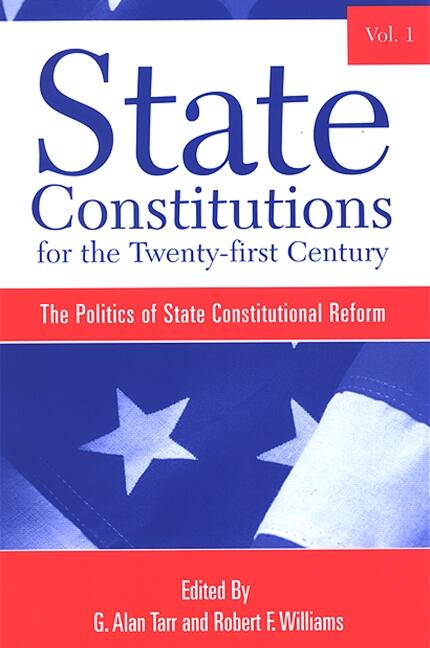
The first systematic analysis of the obstacles to state constitutional reform.
Through illuminating case studies of reform efforts in Alabama, California, Colorado, Florida, New York, and Virginia, this bookthe first of three volumesprovides the first systematic analysis of the political obstacles to state constitutional reform. For those seeking constitutional reform, this useful resource can spell the difference between success and failure, and for those interested in state politics or constitutional politics, it offers rare insight into a distinctive aspect of American constitutionalism. Written by eminent scholars who were, in many cases, also active participants in the reform campaign, the essays provide practical experience, expert analysis, and lessons for future constitutional reformers.
“The distinguished contributors to State Constitutions for the Twenty-first Century have performed a valuable service for scholars and constitutional reformers alike, by explaining why state constitutional reform has become so difficult to achieve and also why it has occasionally succeeded, even in the face of significant obstacles.” John J. Dinan, author of Keeping the People’s Liberties: Legislators, Citizens, and Judges as Guardians of Rights
“If the bones of more noble political leaders of this new century are not to be added to the graveyards of state constitutional revision, then intrepid reformers must heed the political lessons found in these insightful studies of successful and unsuccessful reform of our nation’s state constitutions.” John Kincaid, Lafayette College
“A well-written and important work.” James T. McHugh, author of Ex Uno Plura: State Constitutions and Their Political Cultures
Contributors include Gerald Benjamin, Bruce E. Cain, Anne G. Campbell, A. E. Dick Howard, Rebecca Mae Salokar, G. Alan Tarr, and H. Bailey Thomson.
At Rutgers University at Camden, G. Alan Tarr is Director of the Center for State Constitutional Studies and Robert F. Williams is Associate Director. Tarr is also Distinguished Professor of Political Science and author of Understanding State Constitutions. Williams is also Distinguished Professor of Law and author of State Constitutional Law: Cases and Materials, Third Edition.
Table of Contents
Introduction G. Alan Tarr
PART I: Constitutional Commissions and Constitutional Reform
1. Constitutional Revision in Florida: Planning, Politics, Policy, and Publicity Rebecca Mae Salokar
2. Constitutional Revision in California: The Triumph of Amendment over Revision Bruce E. Cain
3. Adopting a New Constitution: Lessons from Virginia A. E. Dick Howard
PART II: Putting Constitutional Reform on the Agenda
4. Constitutional Reform in Alabama: Long Time in Coming H. Bailey Thomson
5. The Mandatory Constitutional Convention Question Referendum: The New York Experience in National Context Gerald Benjamin
6. Direct Democracy and Constitutional Reform: Campaign Finance Initiatives in Colorado Anne G. Campbell
Appendix: Mechanisms for State Constitutional Change