Available as a Google eBook, for other eReaders and tablet devices, Click below...
Google eBookNew!
Summary
Provides a comparative look at women's texts across the Americas.
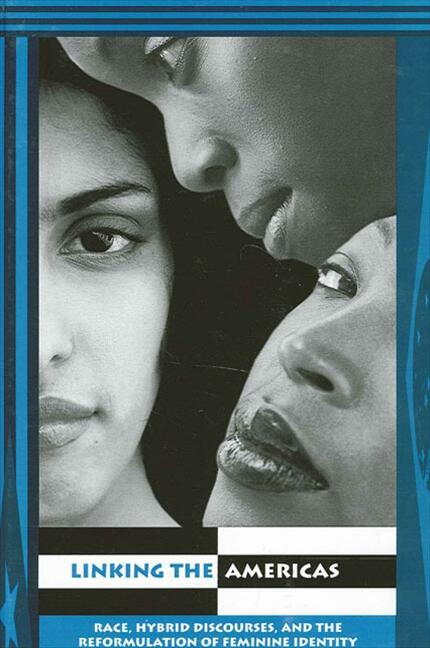
What links women of the Americas? How do they redefine their identities? Lesley Feracho answers these questions through a comparative look at texts by four women writers from across the AmericasZora Neale Hurston, Julieta Campos, Carolina Maria de Jesus, and Clarice Lispector. She explores how their writing reformulates identity as an intricate connection of the historical, sociocultural, and discursive, and also reveals new understandings of feminine writing as a hybrid discourse in and of itself.
"The author frames the book with two underclass black womende Jesus (Brazil) and Hurston (United States)and the central chapters focus on two privileged white women from countries that are famously African-inflected in their culturesLispector (Brazil) and Campos (Cuba). Feracho is subtle about playing the race card, but this is perhaps the most interesting and innovative part of the book, which will inevitably be read in the context of the growing field of Afro-Hispanic literary studies. I applaud the prominence she gives to Brazil, too often left out of, or marginalized in, Latin American literary studies." Debra A. Castillo, author of Redreaming America: Toward a Bilingual American Culture
"I like the comparative approach to the literature of writers separated by time, space, and culture. Notwithstanding color and ethnicity, Campos, de Jesus, Hurston, and Lispector are united by 'feminine writing.' " Marvin A. Lewis, author of Afro-Uruguayan Literature: Postcolonial Perspectives
Lesley Feracho is Associate Professor of Spanish at the University of Georgia.
Table of Contents
Acknowledgments
Introduction
1. The Radicalization of Marginality in Jesus’s Quarto de despejo: Diário de uma favelada
2. Jesus’s Diário and the Hybrid Forms of Textual Agency
3. Authorial Intervention in A hora da estrela: Metatextual and Structural Multiplicity
4. Textual Cross-Gendering of the Self and the Other in Lispector’s A hora da estrela
5. Campos’s Tiene los cabellos rojizos y se llama Sabina: The Multivocality of Identity
6. Telling My Story: Campos’s Rewriting of the Feminine Voice in Sabina
7. The Autobiographical Pact and Hurston’s Restructuring of Difference
8. Wandering through the Dust: Textual Statues in Dust Tracks on a Road
Conclusion