|
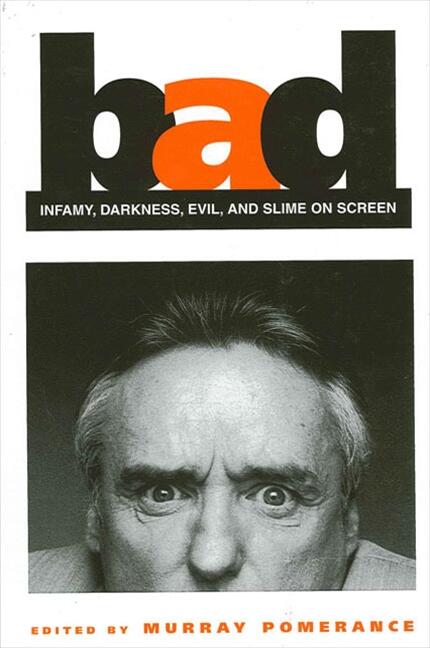
Examines the many forms of cinematic "badness" over the past one hundred years, from Nosferatu to The Talented Mr. Ripley.
Violence and corruption sell big, especially since the birth of action cinema, but even from cinema's earliest days, the public has been delighted to be stunned by screen representations of negativity in all its formsevil, monstrosity, corruption, ugliness, villainy, and darkness. Bad examines the long line of thieves, rapists, varmints, codgers, dodgers, manipulators, exploiters, conmen, killers, vamps, liars, demons, cold-blooded megalomaniacs, and warmhearted flakes that populate cinematic narrative. From Nosferatu to The Talented Mr. Ripley, the contributors consider a wide range of genres and use a variety of critical approaches to examine evil, villainy, and immorality in twentieth-century film.
“…Bad is a lively, important, and welcome attempt to probe and critique the social, political, and economic reasons for the variety and volume of ‘infamy, darkness, evil, and slime on screen,’ exposing aspects of our collective lives that is anything but entertaining.” — University of Toronto Quarterly
“…a good candidate for the book with the most arresting title of 2004 … [is] called Bad: Infamy, Darkness, Evil, and Slime on Screen … by … Murray Pomerance. I don’t know where Pomerance gets these great ideas for essay collections … This collection covers a wide territory of badness … What is really interesting is the question of why villains are so often more compelling and more sympathetic than the supposed heroes of a movie or novel.” — Philip Marchand, Toronto Star
“Pomerance … concludes that these screen evils heighten ‘individuality and personal sanctimony … at the expense of group relations … Badness on film may be a repository of … important secrets.’ The contributors, established academics all, deliver uniformly original, insightful, provocative, and clear analysis.” — CHOICE
"A varied and stimulating collection, informative over a broad range of critical, historical, and theoretical issues, and very entertaining to boot. One of its most laudable characteristics is its willingness to take on fresh and underexplored topics. It should find eager readers among both film scholars and movie buffs." David Sterritt, author of The Films of Jean-Luc Godard: Seeing the Invisible
"What is most intellectually engaging for me is the book's savvy reluctance to attribute 'badness' to any single phenomenon, source, cause, or field of inquiryfor example, malevolence is a matter of ideology, but it is also always 'something else.' The book is rich and complex while remaining accessible to a variety of audiences, and it will make a valuable addition to the field of cinema studies." Michael DeAngelis, author of Gay Fandom and Crossover Stardom: James Dean, Mel Gibson, and Keanu Reeves
Contributors include Aaron Baker, Rebecca Bell-Metereau, Wheeler Winston Dixon, Alexander Doty, Kirby Farrell, Gwendolyn Audrey Foster, Lester D. Friedman, Cynthia Fuchs, Henry A. Giroux, Tom Gunning, Ina Rae Hark, Kristen Hatch, Patricia Clare Ingham, E. Ann Kaplan, Peter Lehman, Gina Marchetti, Dana Polan, Murray Pomerance, William Rothman, Christopher Sharrett, Tony Williams, and Steven Woodward.
Murray Pomerance is Professor and Chair in the Department of Sociology at Ryerson University. He is the editor of Ladies and Gentlemen, Boys and Girls: Gender in Film at the End of the Twentieth Century, also published by SUNY Press, and Enfant Terrible!: Jerry Lewis in American Film.
|