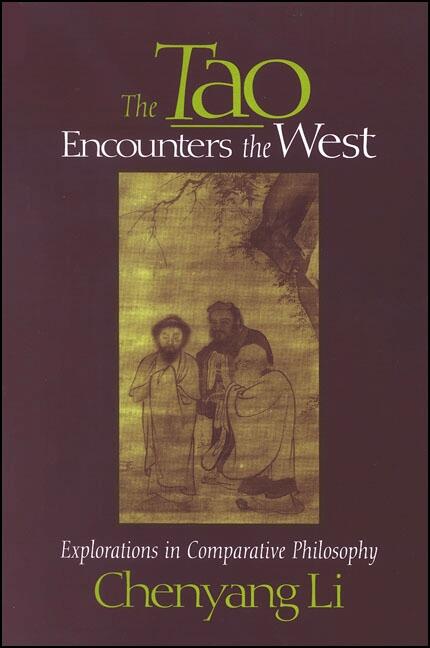
The Tao Encounters the West
Explorations in Comparative Philosophy
Alternative formats available from:
Examines liberal democracy and Confucianism as two value systems and argues for a future where both coexist as independent value systems in China.
Description
The relation between liberal democracy and Confucianism is explored by author Chenyang Li as he argues for a Chinese future where both coexist as independent value systems. This relationship is shown through a comparative study of Chinese and Western ideas and philosophies of being, truth, language, ethics, religion, and values. The book covers a wide range of philosophers and philosophies, including Aristotle, Zhuang Zi, Heidegger, Confucius, Kripke, and feminist care ethics. Li shows how a comparative approach to different patterns of thinking in Chinese and Western traditions sheds light on the intelligibility of Chinese multiple ethico-religious practice, which in turn supports the claim that democracy and Confucianism can coexist as independent value systems. In addition, Li's comparative study of different patterns of thinking in Chinese and Western traditions sheds light on the "harmony" model of Chinese philosophy and culture.
Chenyang Li is Associate Professor of Philosophy and Chair of the Department of Philosophy and Religious Studies, Monmouth College.
Reviews
"Not only does Li discuss the multiple crossings of experience within Chinese philosophy as exemplified by the cosmology of Dao but also compares them with the West … Li has written a provocative and deeply thoughtful book for both experts and novices in Chinese and comparative philosophy. His rich discussion of Aristotle and Heidegger provides grounding for issues of language, ethics, religion, and justice. As such, The Tao Encounters the West is a book that significantly engages and sustains an East-West dialogue, itself an increasingly prominent juncture for philosophy of the 21st Century. " — Dao
"This work is a study in comparative philosophy that engages modern Western and Chinese thought, and does so quite well. The author obviously is at home in both the Western and Chinese classical and modern material. One of the real strengths of the work is that it deals with a number of complicated comparative issues. The author shows that classical Chinese thought still has something to offer to the modern philosophic debate when its concepts are carefully reviewed and presented in a fashion that makes sense to contemporary readers. I found the work on the comparison of feminist ethics and Confucian ethics appealing. This kind of work really shows one of the main subtexts of the whole project, namely the revivification of Confucian thought. " — John H. Berthrong, author of Concerning Creativity: A Comparison of Chu Hsi, Whitehead, and Neville