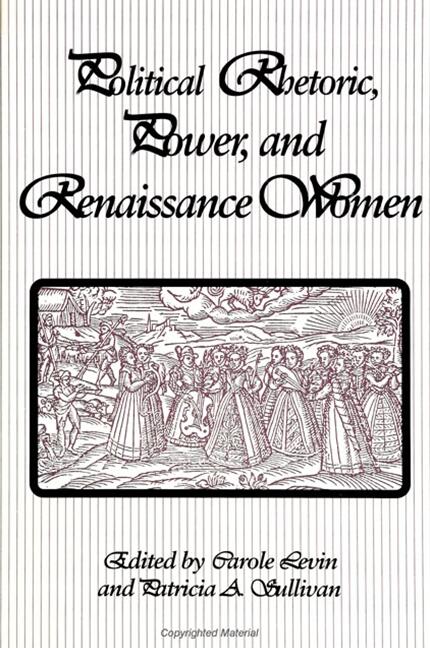
Political Rhetoric, Power, and Renaissance Women
Alternative formats available from:
This book deals with women in political power during the sixteenth and seventeenth centuries (Anne Boleyn, Elizabeth I, Catherine de Medici, Mary II) and about the gender-based stereotypes that were produced rhetorically about them.
Description
The authors examine the political rhetoric of a number of powerful women of the Renaissance, male responses to this rhetoric, drama and fiction by both male and female authors considering women and political context, and how historians—then and now—have evaluated powerful women.
A multi-disciplinary collection, the book includes an essay about Christine de Pizan and her fifteenth-century look at powerful women, an examination of seventeeth-century rhetoricians and how they viewed and reshaped the Renaissance in terms of giving power to women, and examples of English and French women in the sixteenth and seventeenth centuries.
The afterword contextualizes these examples and raises questions about modern issues. The book provides a greater understanding of gender and power in the Renaissance as well as insights into the contemporary age.
At State University of New York College at New Paltz, Carole Levin is Professor of History. Levin is also the author of The Heart and Stomach of a King: Elizabeth I and the Politics of Sex and Power; Heroic and Villainous Images of King John; as well as the coeditor of Ambiguous Realities: Women in the Middle Ages and Renaissance and Sexuality and Politics in Renaissance Drama. At State University of New York College at New Paltz, Patricia A. Sullivan is Assistant Professor of Communication.
Reviews
"This book is the only one that I have seen on the topic of women in Renaissance politics. It adds a crucial piece to the puzzle of women's contributions to political decision-making throughout the centuries. This anthology shows women's power even in cultures and societies where women systematically were denied public authority. It will be a valuable book for anyone interested in women's history and women's rhetoric. " — Helen M. Sterk, Marquette University